
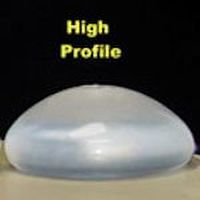
High profile breast Implants have a smaller base diameter so it preserves the appearance of a narrower chest, and you get more anterior projection from the same 400cc volume. High profile implants have a more up front look.

DR. RICARDO L. RODRIGUEZ
Founder, Ricardo L. Rodriguez MD, Baltimore Plastic Surgeon
Medical Director, Cosmetic Surgery Facility, LLC
Board-Certified, American Board of Plastic Surgery
Dr. Ricardo L. Rodriguez, a Board-Certified Plastic Surgeon in Baltimore, Maryland shares his expertise and vast career experiences with various plastic surgery procedures. In his articles Dr. Rodriguez offers trusted guidance on elective surgery, helping you make informed decisions on how to look and feel your best.
High profile breast Implants have a smaller base diameter so it preserves the appearance of a narrower chest, and you get more anterior projection from the same 400cc volume. High profile implants have a more up front look.
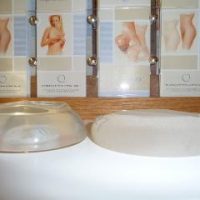
Many times during a breast augmentation consult a patient will say to me: “I want to look proportionate.” In other words, the patient wants to make sure that a particular implant size will look right on her. The right proportion is determined by several factors. A good proportion is not only determined by the size…

Tubular breast deformity is a condition where the breasts have the shape of cylindrical tubes. Dr. Rodriguez, a Yale trained plastic surgeon, explains how this can be corrected with a certain type of implant and incision. Read about it in his Cosmeticsurg blog.
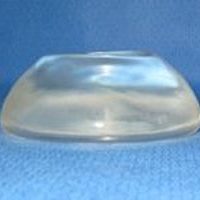
If you are considering Breast augmentation, don’t get too focused on a particular implant size. The shape of the implant will also play a big role in your implant selection! Watch Dr. Ricardo Rodriguez explain what the difference is between a 350cc high profile implant vs. a 350cc moderate profile implant. Dr. Rodriguez is a Yale trained, Board Certified Plastic Surgeon who has been in practice for over 20 years. Ask questions about implant selection at his Cosmeticsurg blog.

Most patients are often surprised by the choices and considerations they’re faced with when considering a Breast augmentation.
Looking at your breasts the way a doctor does can be an emotional event full of new information which may be hard to process. However, it is essential that you and your doctor are ‘on the same page’ regarding the type of implant and surgical approach that will be used.
After the initial consultation, I prefer to see all of my patients one more time to be sure that we have answered all of the questions.

While the decision to augment your breast is usually an easy one, the decision to have a Breast Lift with Implants is not always so obvious. To help you better think this through, I have come up with some questions that you should think about. These questions should help you decide IF you need a lift with your Breast Augmentation.
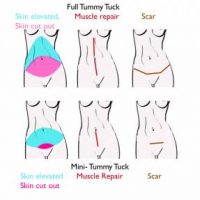
I get many patients who come into my Baltimore office requesting a Tummy tuck. The Tummy tuck will give a much flatter tummy, and if they get liposuction around the love handle area, a drastic reshaping of the entire midsection. But the biggest drawback is the scar. It goes most of the time from hip bone to hip bone. Invariably, I get the question, can we do a Mini Tummy tuck? The patient is hoping to get most of what she needs with a smaller scar and a less involved surgery. What is the difference between the Tummy tuck and the Mini Tummy tuck?
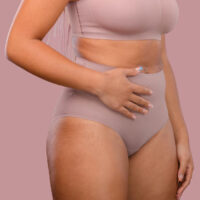
“Can I have another procedure at the same time as the Brazilian butt lift?” The answer is yes and no. A Tummy tuck can be safely combined with the Brazilian butt lift to give a great result. However, combining the butt lift with breast aug is usually not advisable. Watch this video by Dr. Ricardo Rodriguez, a Yale trained Plastic Surgeon.
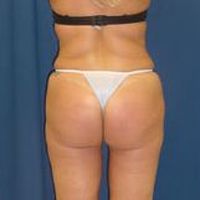
In this video I discuss the difference between two types of liposuction: tumescent (suction) liposuction with suction assisted cannulas vs. laser/ultrasonic assisted liposuction. Both of these techniques remove fat, but they differ in technique and results.
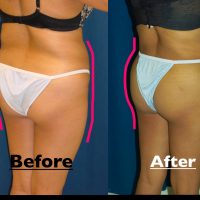
There are two ways to enhance the appearance of the buttocks that include the usage of Liposuction techniques. They are the Brazilian butt lift and the B’more butt lift. The B’more butt lift is a refined version of Lipo 360. The Brazilian Butt Lift involves liposuction of your entire torso and then injection of the fat into the buttocks. Both procedures will improve the shape of the buttocks.
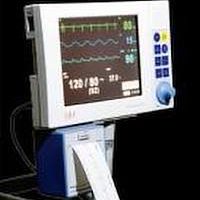
Five levels of anesthesia used in Cosmetic Surgery are:

The cost of a body lift can vary significantly based on the scope of the procedure and additional expenses. According to the American Society of Plastic Surgeons (ASPS), the average cost of a lower body lift surgery is $9,449, but that only covers the surgeon’s fee. It doesn’t include things like anesthesia, operating room, and other associated costs. Meanwhile, RealSelf reports an average cost of $16,425 for a body lift, with patient reviews indicating a range from $10,300 with insurance to as much as $40,000 out of pocket.

Dr. Ricardo Rodriguez explains why the recovery period for the Brazilian butt lift is 3 weeks. If you sit sooner than that it can prevent some of the fat grafts from surviving. Sitting during the recovery period is harmful to the new fat grafts because it exerts a tremendous crushing pressure, up to 400 pounds per square inch in some areas, on these tender cells and tissues. Even the areas that are not crushed are under such pressure that blood flow is shut off.
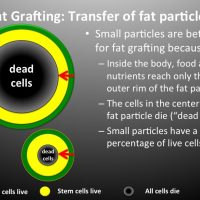
Patients routinely get fat grafts to the face, breast, and buttocks. However, some patients do not get the result they wanted because the fat graft did not ‘take.’ So, what happened? Why do fat grafts sometimes die or fail to take? In this post, I will explain one of the most important factors in creating a long-lasting fat graft. When the recipient tissue is normal, there really should be no need for a touch-up, or revision. Plastic surgeons have all of the tools they need to create a good fat graft on the first try!
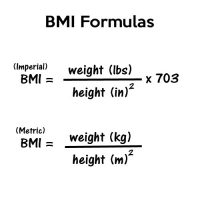
Your BMI, or Body Mass Index, plays a big role in surgical complication risk assessment. All cosmetic surgery patients should have a BMI assessment prior to surgery. The BMI is a number that compares your weight to your height. High BMI’s create higher surgical risks.
Patients with a BMI less than 35 are typically good candidates for the Tummy Tuck and BBL. However, every surgeon has a different guideline for what is the acceptable BMI for an elective surgery.