


Smart lipo is a new technique for liposuction.
Smart Lipo and Ultrasound Lipo do not suck the fat out
New techniques usually have a period of intense excitement by media and surgeons, fueled by the promise of better results. It takes time before we get enough experience to know what are the true pros and cons of the technique. We went through this cycle with ultrasound lipo, but ultrasound hasn’t caught on in a major way. It remains to be seen whether Smart Lipo catches on.
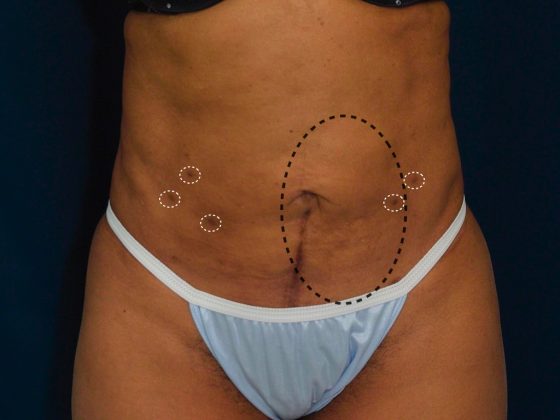
Like proponents of Ultrasound lipo, Smart lipo proposes that the energy given off by the cannula (the long cylinder) melts fat cells and helps tighten skin. The process is supposed to be less traumatic and give better results. But does it, really?
Recently, I saw a patient who came to me because she was unhappy with her Smart Lipo results which were performed by another physician. She had Smart Lipo several months ago and her photos (after Smart Lipo) are shown to the left. She is unhappy because she has, in her own words, lumpy bumpy skin below the belly button, and a pocket of fat on the right of the belly button. She had one revision already and she feels her skin, if anything is looser now. She also states she had a lot of pain after surgery, and still has pain, although it is much better. Finally, she asked if there was anything I could do to fill in the wrinkles in her back.
To help you understand her concerns better, let’s discuss the difference between the traditional liposuction techniques and the new laser techniques. The word Liposuction means literally sucking fat. Traditional liposuction does just that, it sucks the fat. It is a mechanical effect which is performed with a long cylindrical tube called a cannula. Smart lipo and Ultrasound do not suck the fat out. Instead, these technologies perform lipolysis, which means to cause the death of the fat cell by destroying the cell membrane.They do so using heat energy, instead of the manual effort of sucking the fat out.
The problem with these laser lipo techniques is finding out how much energy to use. Results vary dramatically according to the amount of heat energy used. The learning curve with ultrasound technology has been to diminish more and more the field of energy given off by the cannula. The pioneers in Laser lipo are in the process of fine tuning how much energy to use to get the best results. I know, because they present the data openly and honestly at our annual ASPS (American Society of Plastic Surgeons) meetings. Moral of the story: These technologies are not there yet.
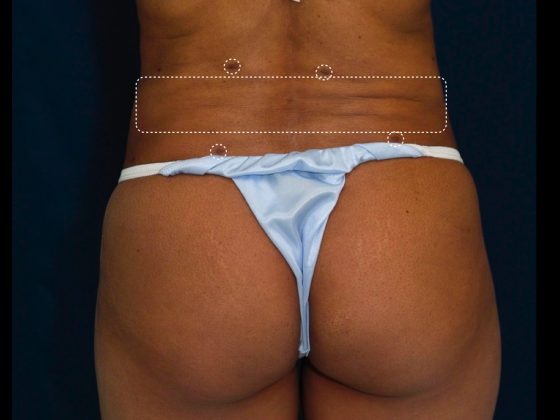
To me there are three problems with Smart Lipo. The first has to do with the fat that is left behind. How much has been injured, but not lysed, and how will this injured fat heal? This problem is like what happened to skin laser technologies. We can’t really predict how the injured tissues will heal. The initial excitement of laser skin resurfacing was damped by the unpredictable and varied results. I believe that ultrasound liposuction does not offer predictable results.
The second issue with Smart Lipo has to do with the promise of skin tightening. The skin tightening seen with Smart Lipo is temporary and has to do more with swelling and immature scar formation than a permanent change. The same promise was made with ultrasonic lipo and it was not shown by experience. This patients back view picture demonstrates this clearly. Whether too much fat was taken off or the fatty tissue destruction was unpredictable, there was no skin tightening in this patient.
The third concern has to do with the issue of pain. The cells (Schwan cells) that protect the nerve fibers are filled with fat that acts as an insulator. This fat is also lysed by the lipolysis techniques (Ultrasound and Smart Lipo). The fibers are then raw for a while. This is why there can be more pain with Smart Lipo compared to traditional liposuction with thin cannulas.
Having also seen poor results with Ultrasonic liposuction, I will wait until this Smart Lipo technique is refined, and will spare my patients the giant experiment going on to figure out what the right dose of energy is for Smart Lipo.
In the meantime, there is already a technology that has had multiple refinements and has stood the test of time (decades) for safety, reliability, and predictability. It is fine cannula liposuction. It is hard to do, because it is manual and takes stamina, but it pays off. I am sure there are surgeons that get great results with Smart Lipo, but it is because of their skill and knowledge, not because of the technology. With Smart Lipo–It’s the tennis player, not the racquet, that wins the match.
Traditional liposuction with thin cannulas still offers the best consistently good results .


